
dbSlice for Linux, in Docker: the same tools, in your browser
Docker image · browser interface · sold by contact
The Linux edition runs as a Docker container on your company’s server. Your team opens it in a browser and finds the tools of the Windows app: the Assistant, Synchronize, Compare, the Replicator and saved jobs.
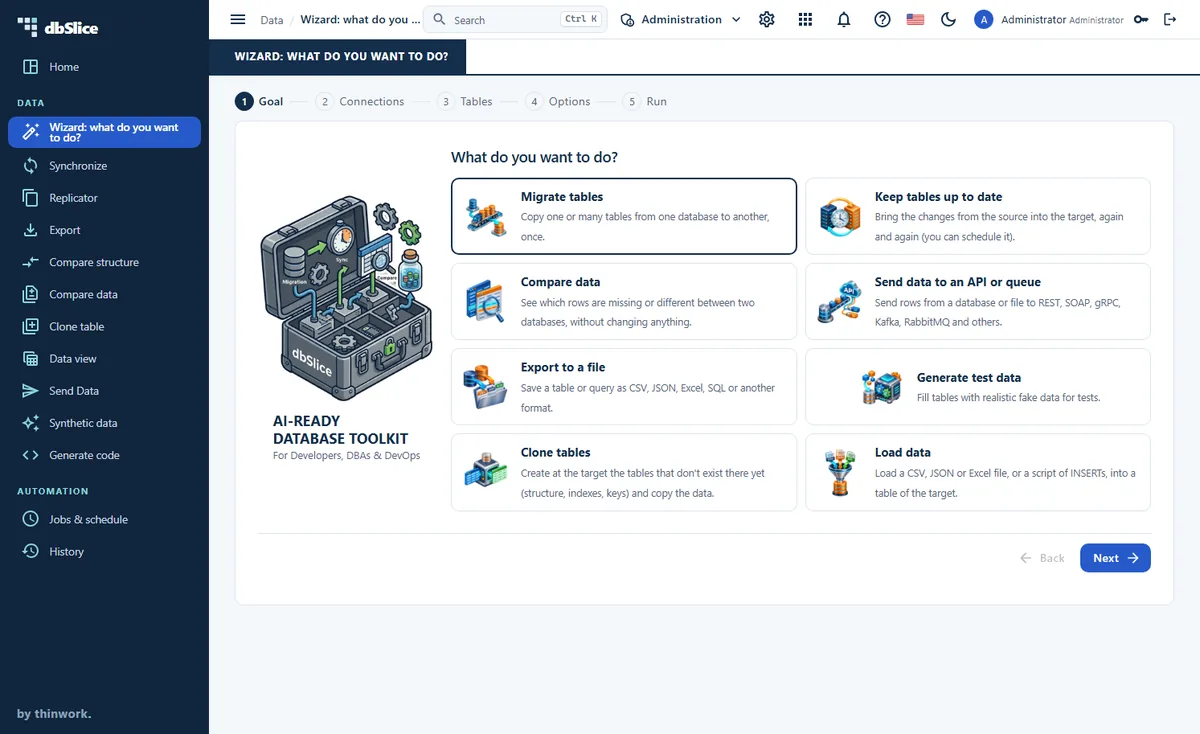
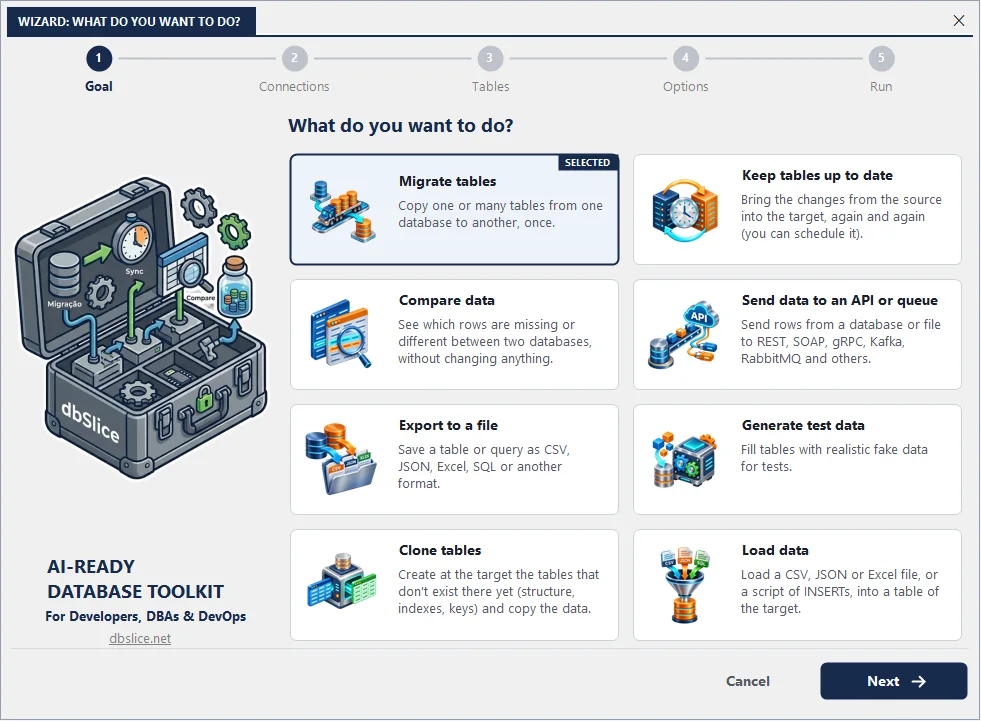
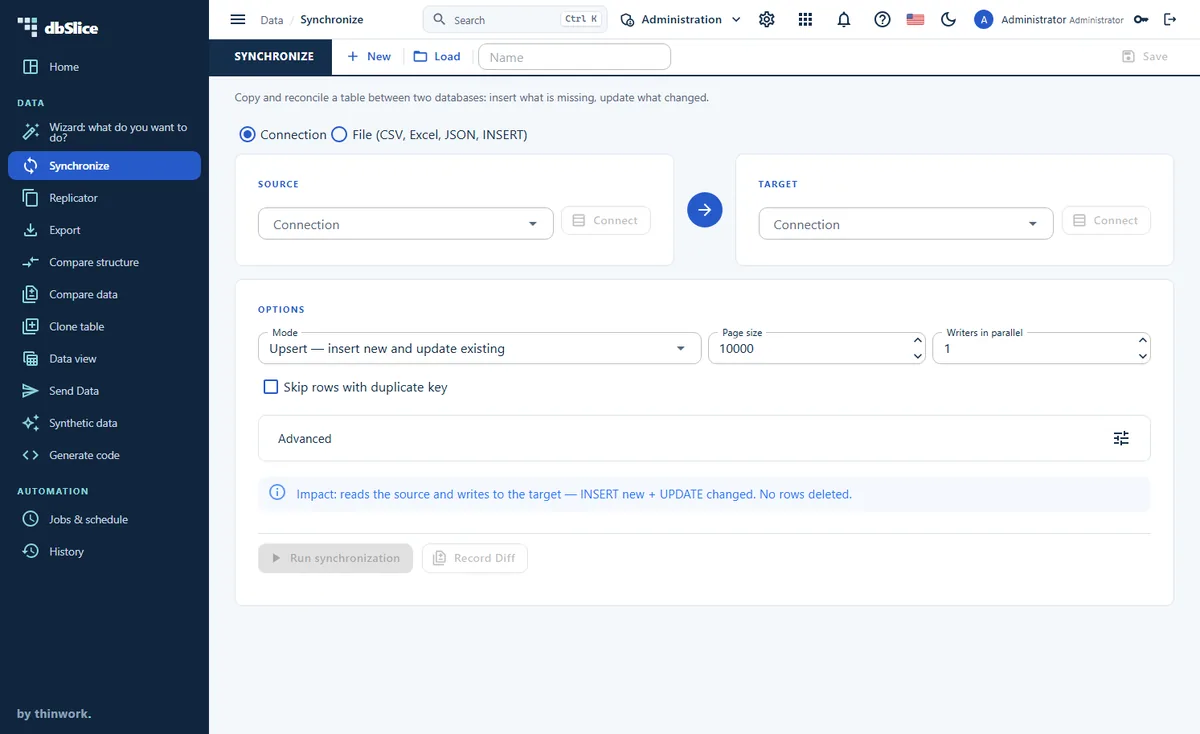
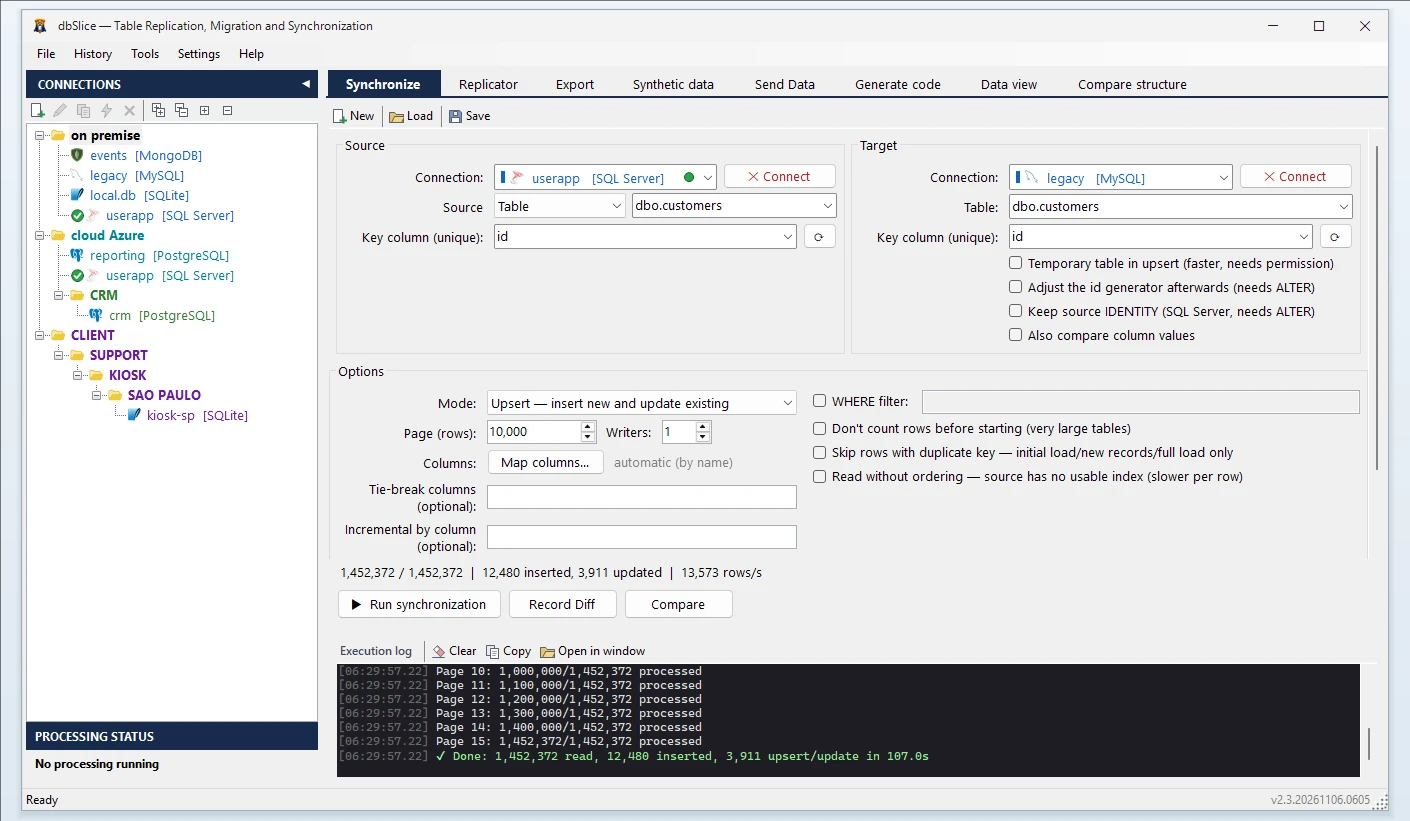
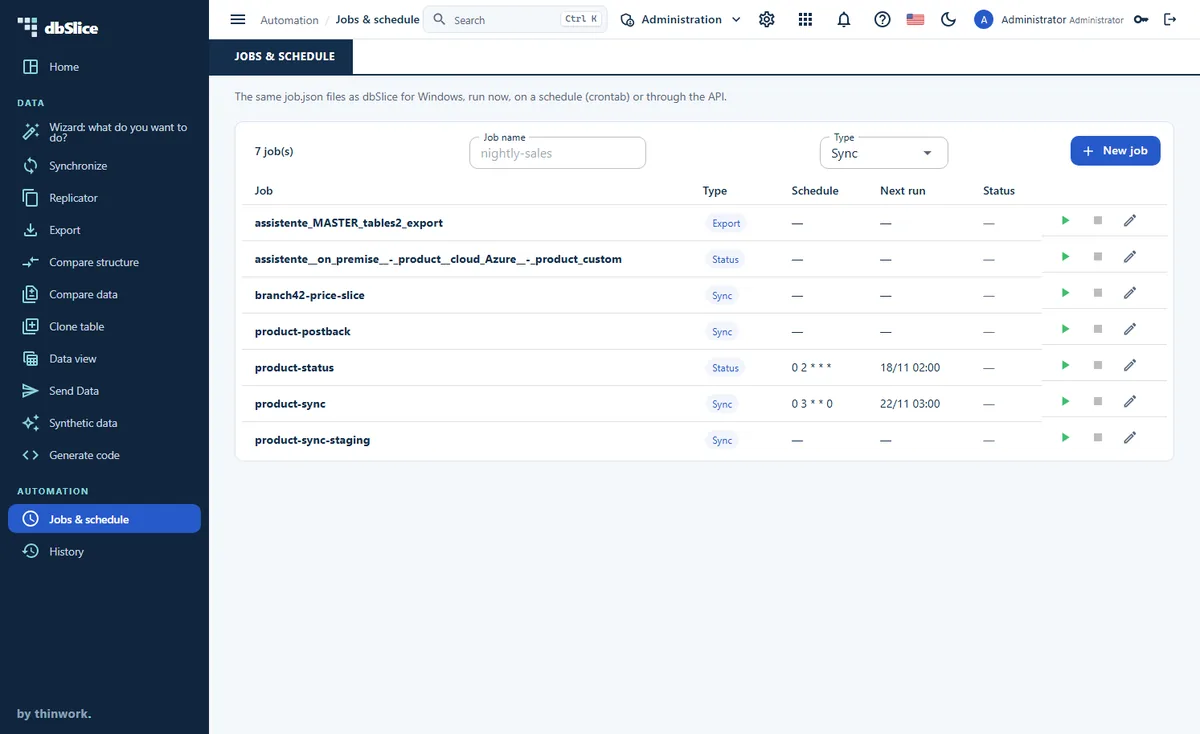
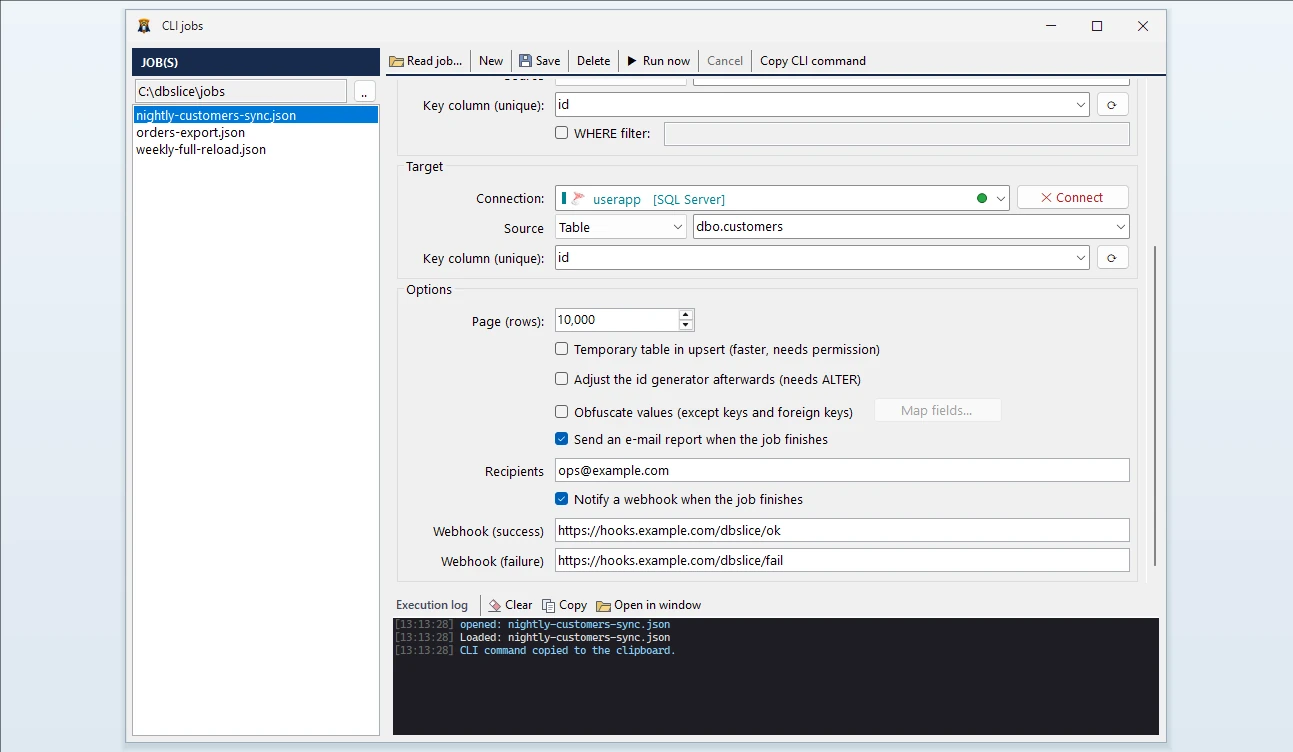
Same screens, side by side
The Windows app on the left, the Linux edition in the browser on the right.
Pick what you want to do. Migrate, keep tables up to date, compare, send, export, generate, clone or load, in five steps.
Copy and keep in step. Upsert, insert-new or incremental runs, by key.
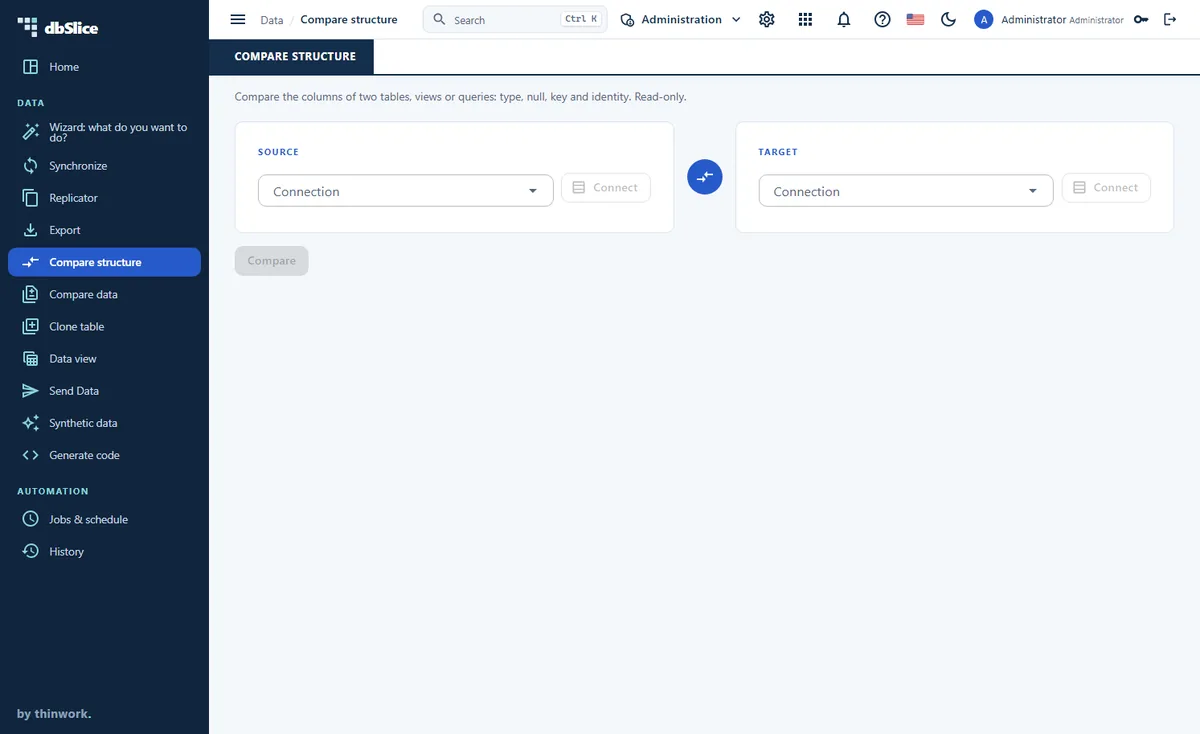
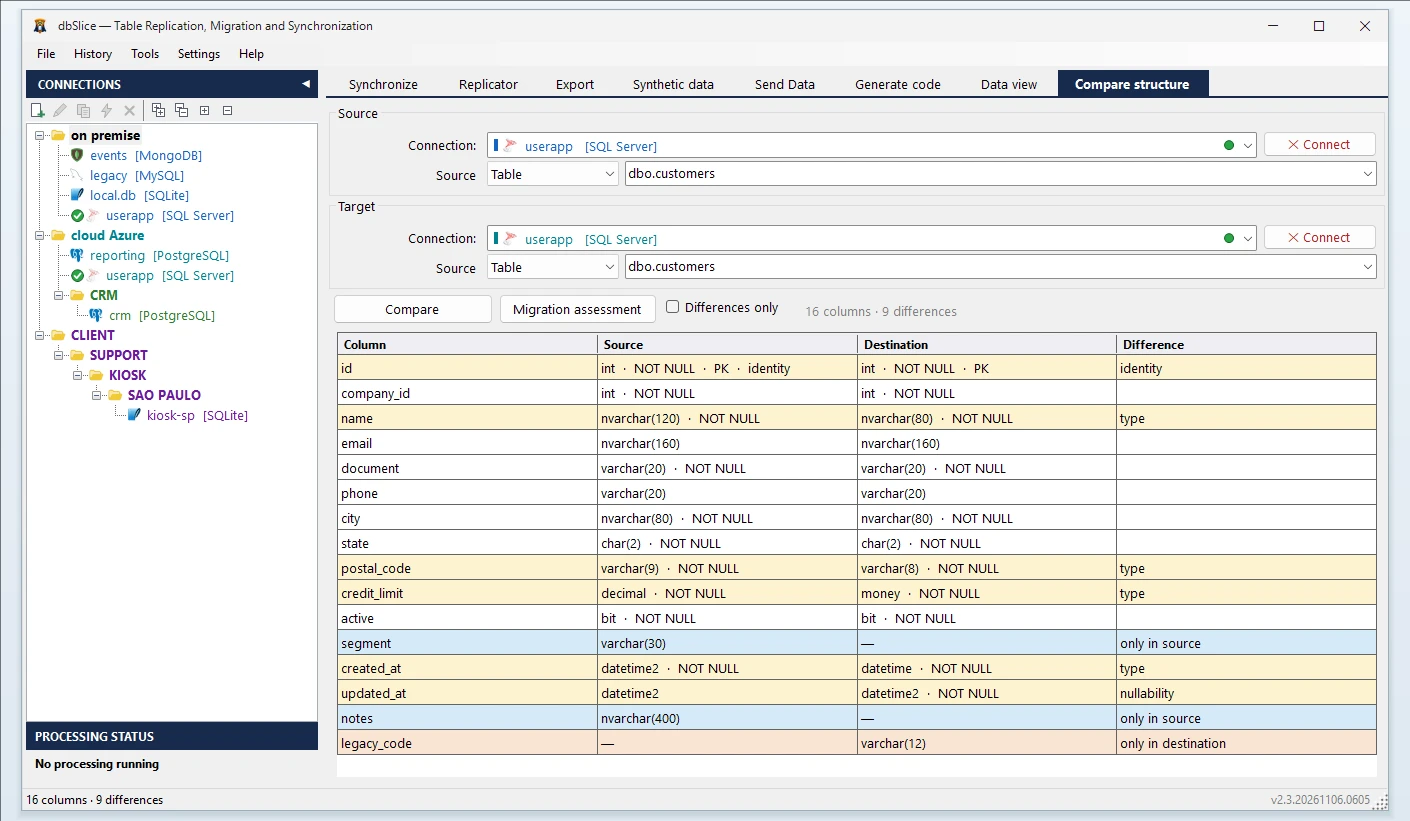
Compare the structure. Columns, types, nulls, keys and identity, side by side, before you move the data.
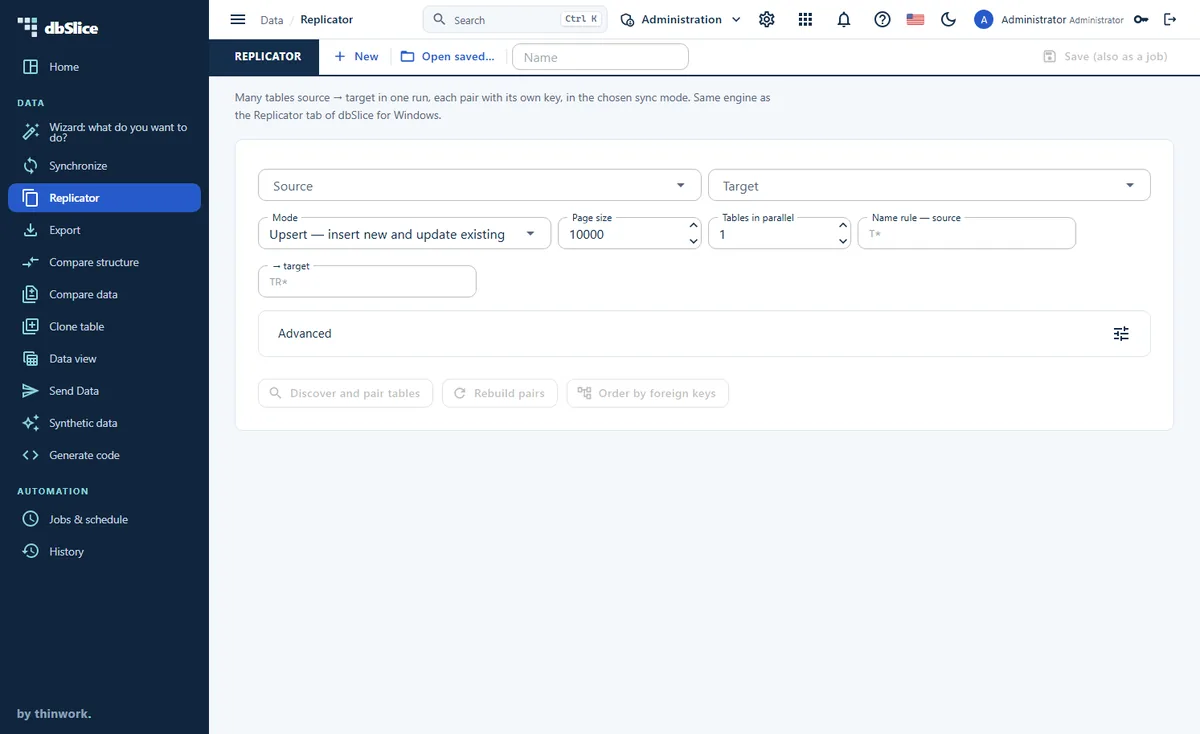
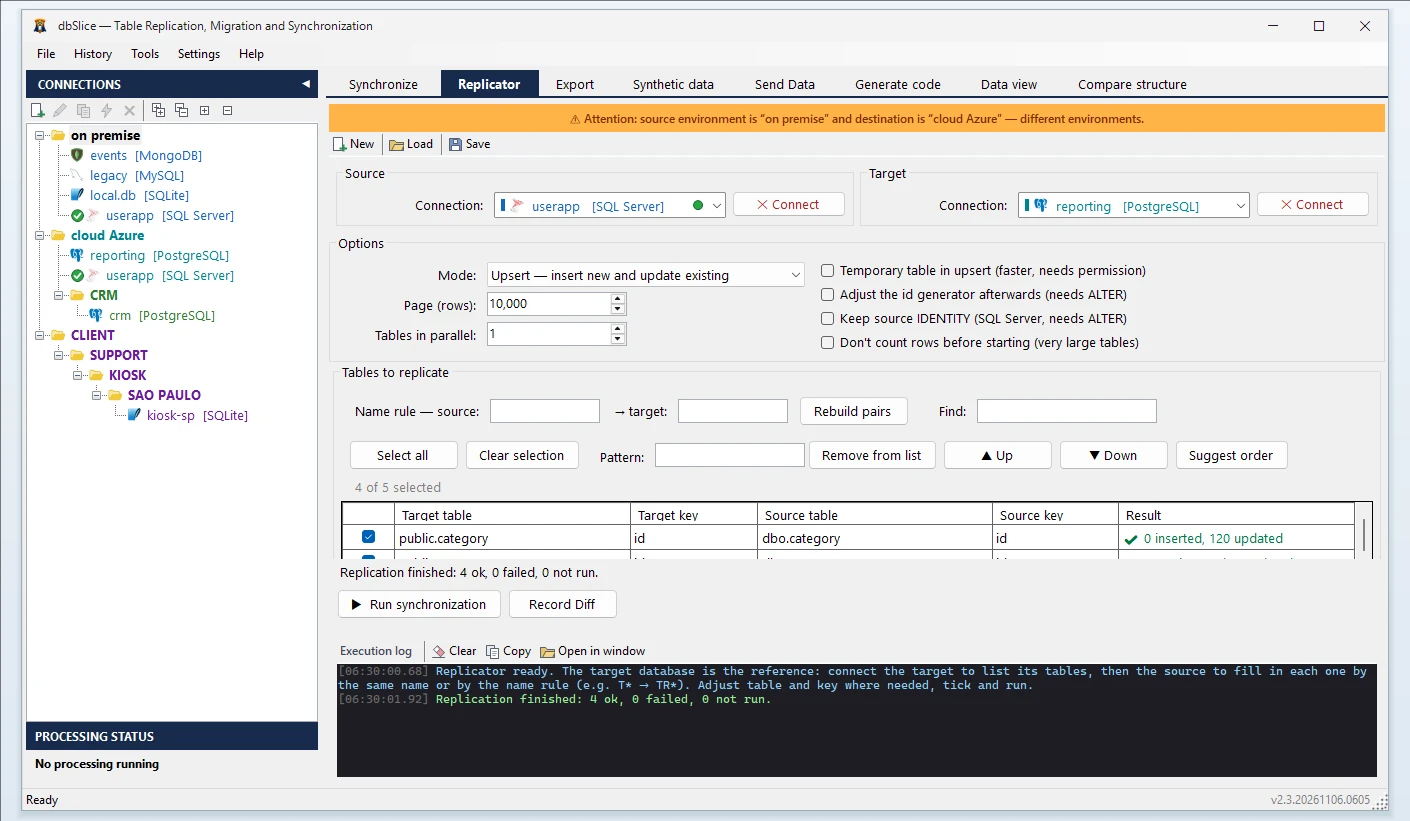
Many tables in one run. Order, page size and parallel writers per job.
Run it on a schedule. The same job file, from the Windows CLI or the built-in scheduler on Linux.
What the Linux edition adds
- Several people, one server: users with roles (admin, operator, read-only), their own passwords and required two-step verification (authenticator app; e-mail codes optional, with SMTP). One session per person.
- A scheduler inside the container and a job API with tokens, for CI/CD pipelines and shell scripts.
- Data and logs on a volume you own.
- Runs on your infrastructure: your server, your network, your databases. Rows never go to Thinwork.
How it is delivered
Each Linux installation is a short project with your team: the Thinwork team helps set it up in your company’s environment (server, network and databases). That is why the Linux edition is sold by contact, not by download.
Coming next: dbSlice for Mac
Our team is working on a native edition for Macs with Apple Silicon, with the same features as the Windows version. In development, planned for 2027.
Prefer the Windows app? It is on the Microsoft Store, with a free trial. See the product →