Build or buy database replication: what your script needs in year two
Build vs buy for database replication: the year-two checklist of an in-house sync script, what a tool replaces, and when ETL or CDC should stay.
Continue readingDemos, measured numbers and practical notes on moving, syncing and masking data between databases. · Português
Build vs buy for database replication: the year-two checklist of an in-house sync script, what a tool replaces, and when ETL or CDC should stay.
Continue readingOffline, phased, initial load with scheduled catch-up, or log-based CDC: how to pick a data migration pattern from change rate, outage window and delete handling.
Continue readingEqual row counts are not proof. Six layers of evidence — coverage, keys, values, relationships, business totals and application tests — before you switch production.
Continue readingChoosing a data migration tool for several databases: coverage under one license, sync after cutover, proof of the result and safe operation.
Continue readingWhat a data migration tool costs: pricing models, per-pair vs one license, maintenance in year two and the team hours missing from the price.
Continue readingBuild a data migration strategy with practical steps for mapping, loading, synchronization, validation and cutover. See where dbSlice fits in the workflow.
Continue readingA network blip or a consumer bug leaves source, service database and cache out of step. Compare key by key, fix the target and re-send only the records that drifted.
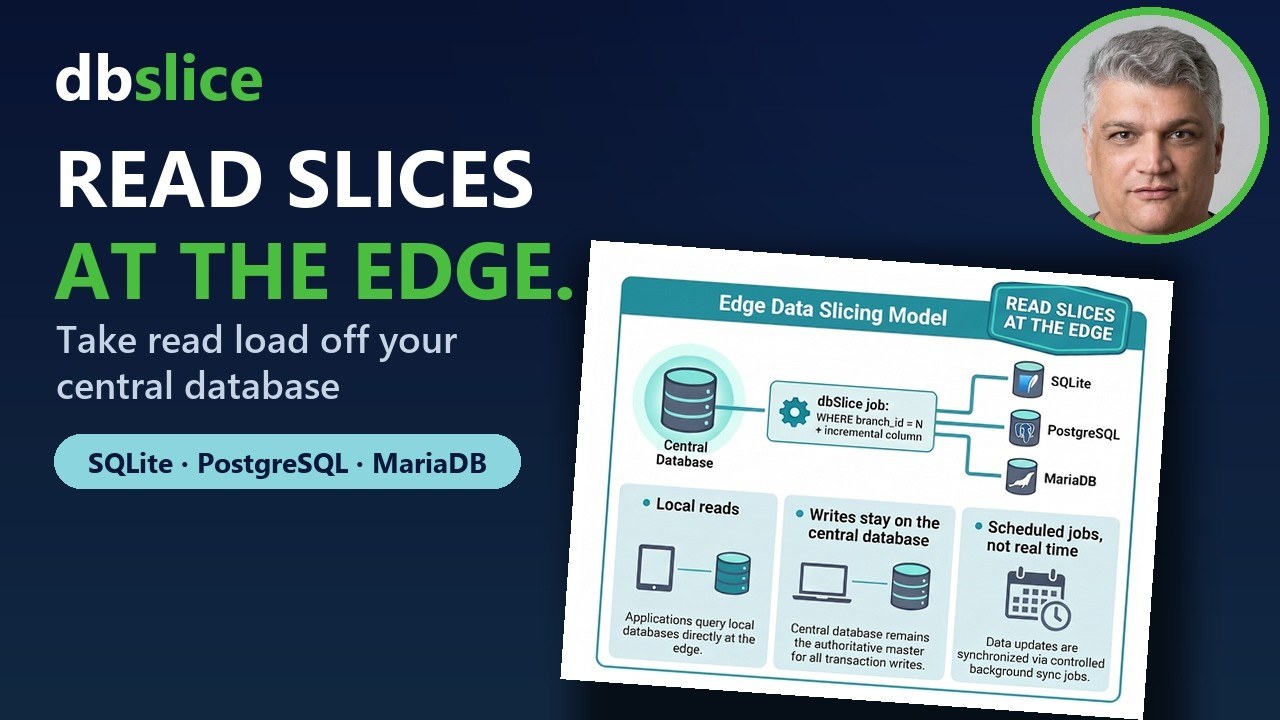
Continue readingKeep writes on the central SQL Server or PostgreSQL and move read-only slices to SQLite, PostgreSQL or MariaDB at the edge, refreshed by dbSlice on a schedule.
Continue readingA last_modified watermark loses rows when timestamps tie at a batch boundary or a transaction commits late. Compound watermarks, safety lag and rowversion fix both.
Continue readingNo post matches your search on this page.